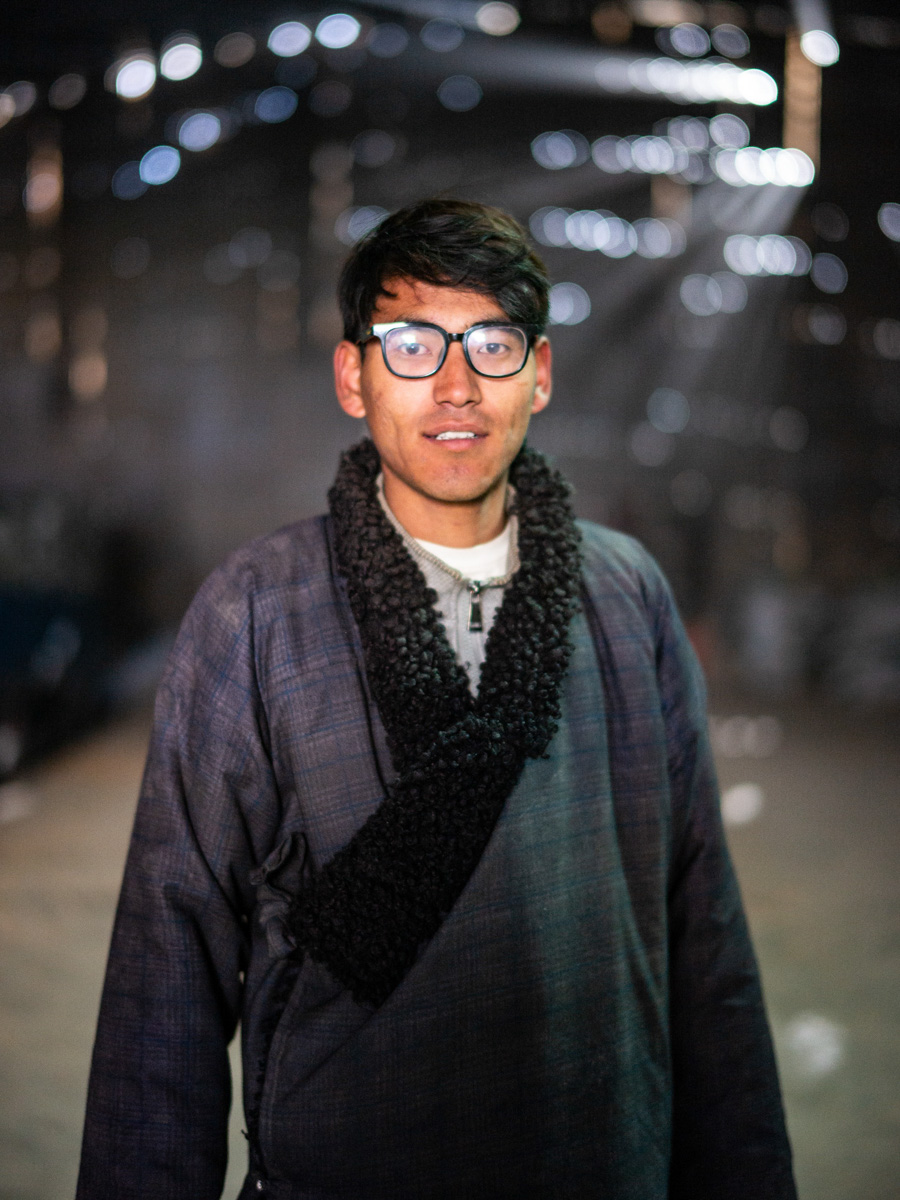
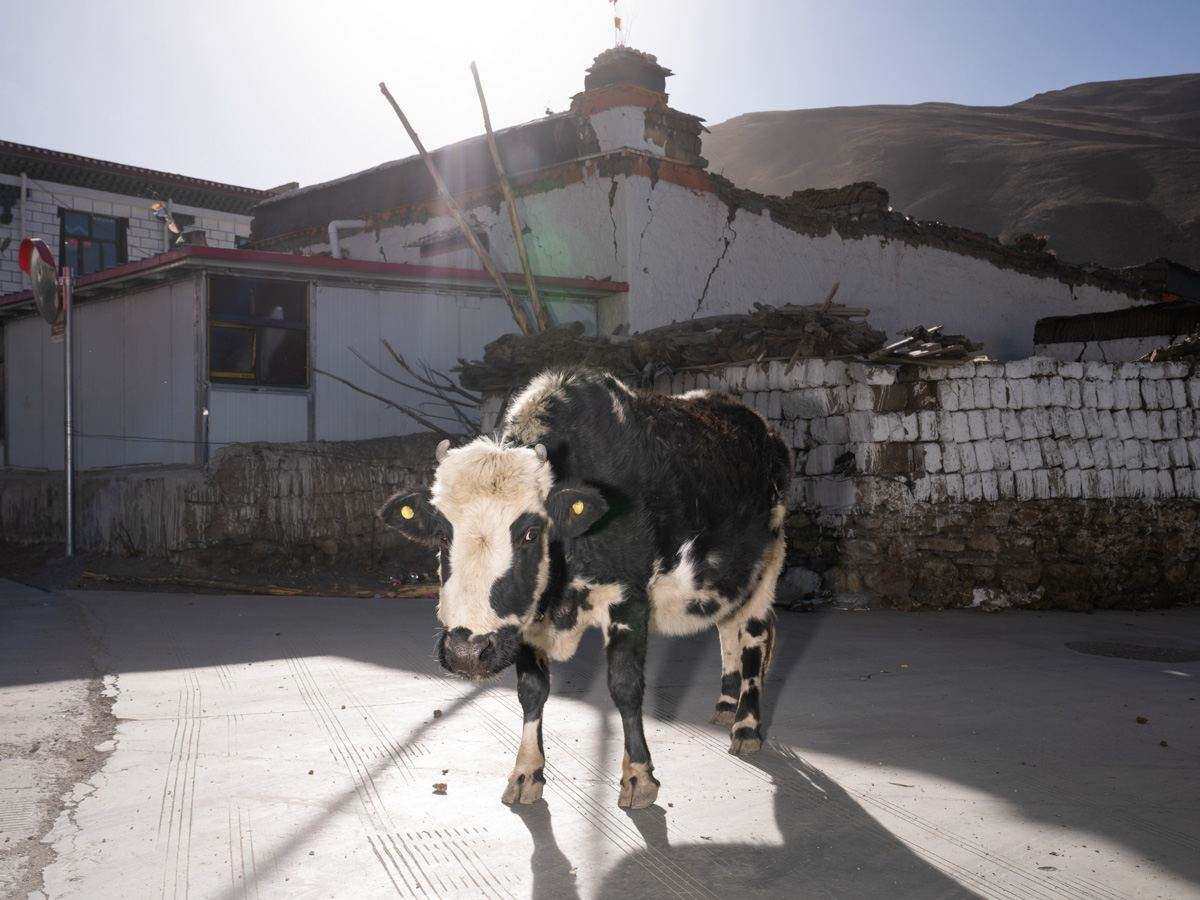
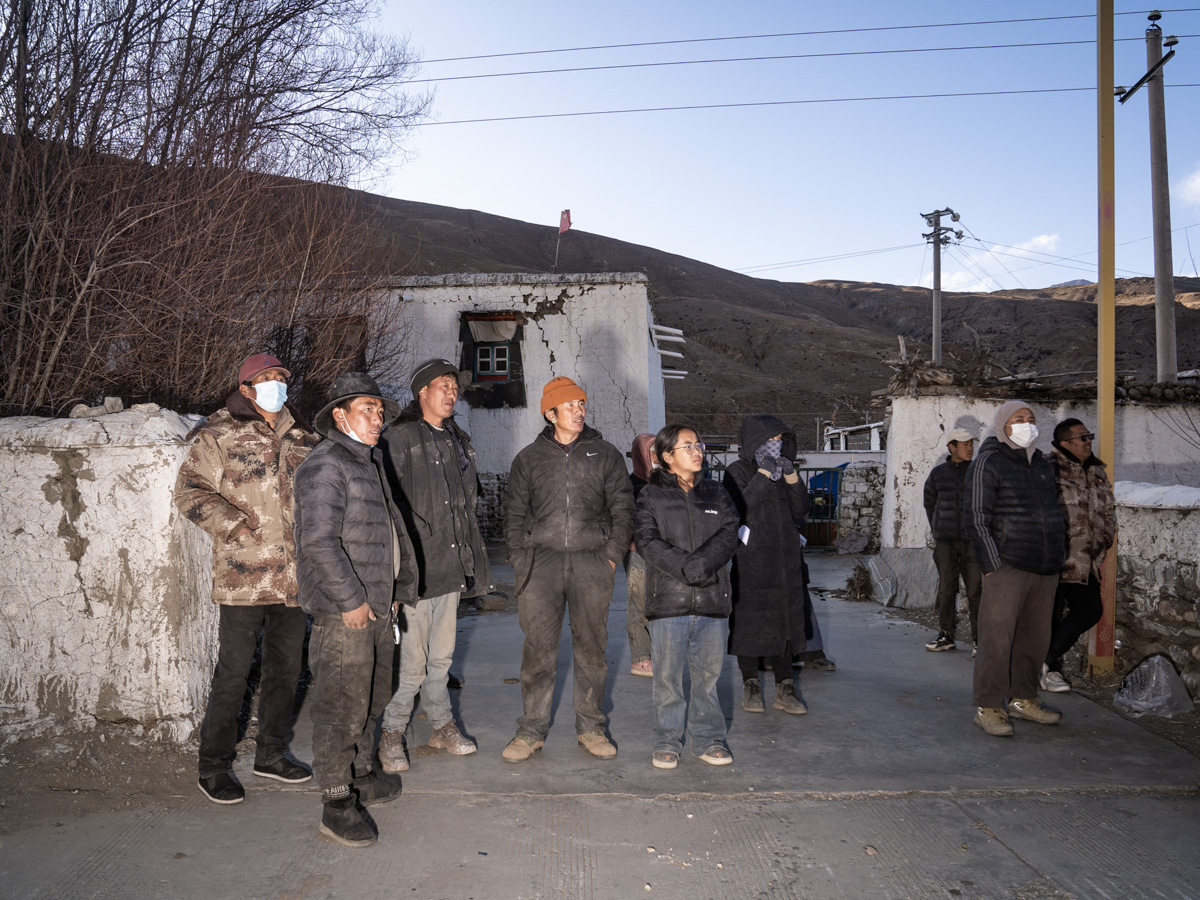
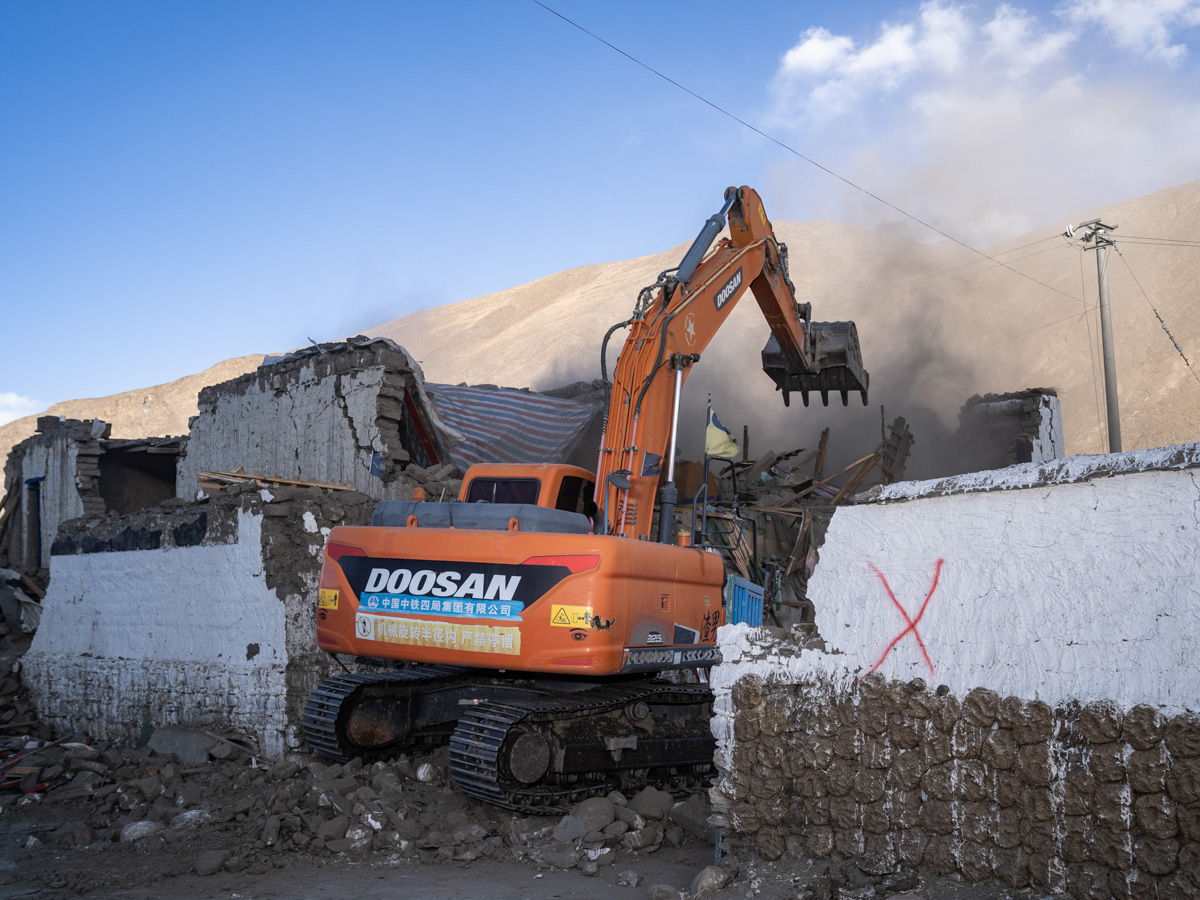
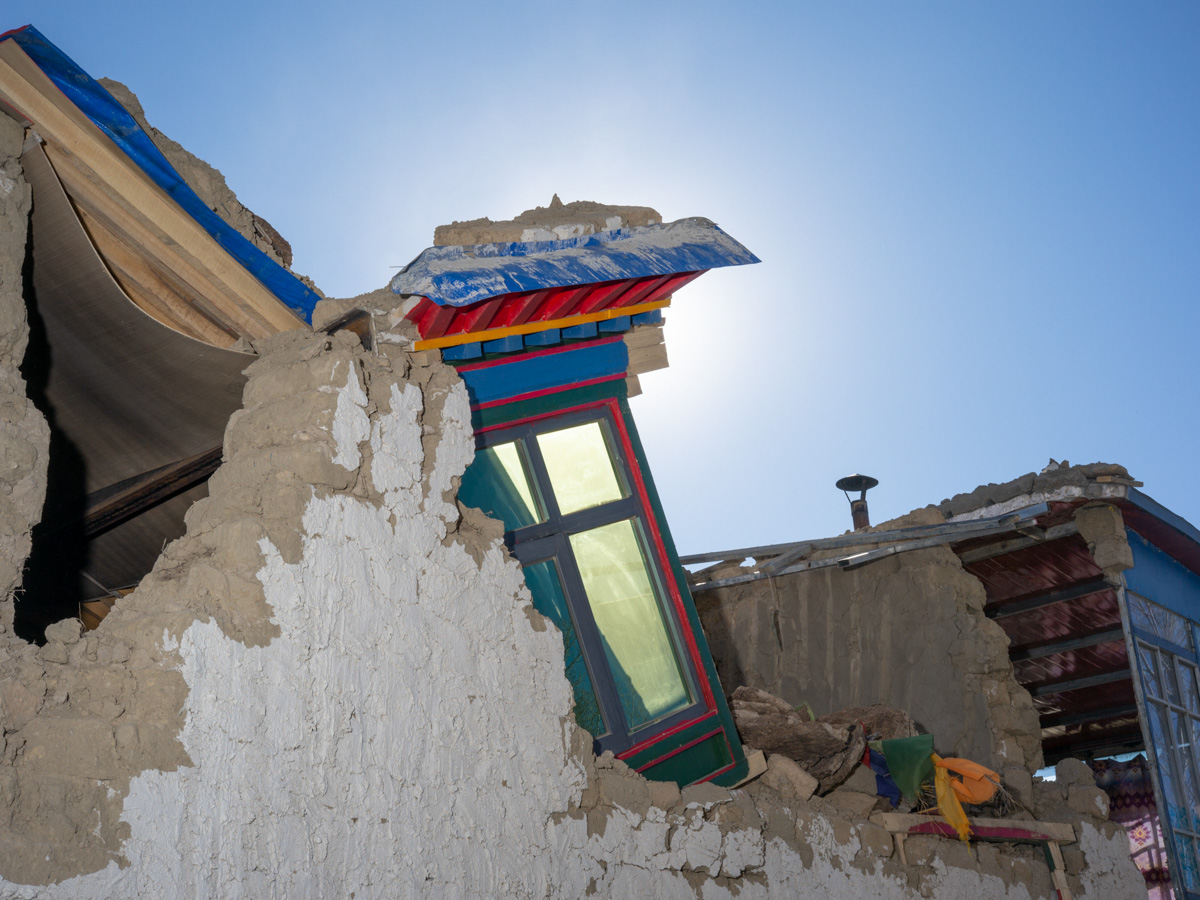
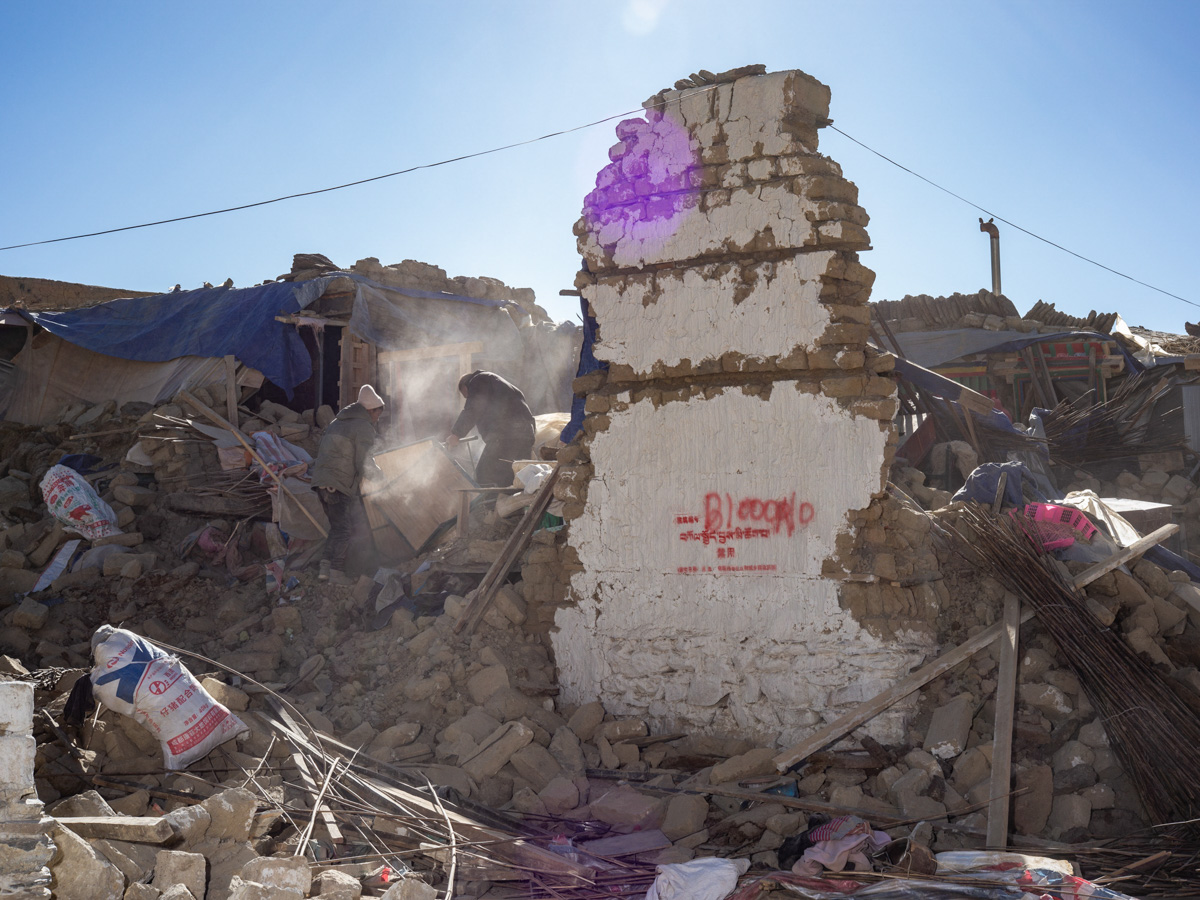
On January 7, 2025, a magnitude 6.8 earthquake struck
Tingri County in Xigaze, Tibet, with a focal depth of
10 kilometres. Following the disaster, I traveled from
Chengdu to team up with a non-governmental foundation
in Lhasa, before driving out to the frontline to document
the affected townships in Tingri.
It was a grueling challenge, both physically and emotionally.
Navigating through Tingri—where the altitude averages well
over 4,300 metres—involved endless hours of driving along
treacherous roads, followed by trekking through rubble with
a heavy camera pack. At this extreme altitude, every breath
felt earned, and the weight on my back grew heavier with
every step.
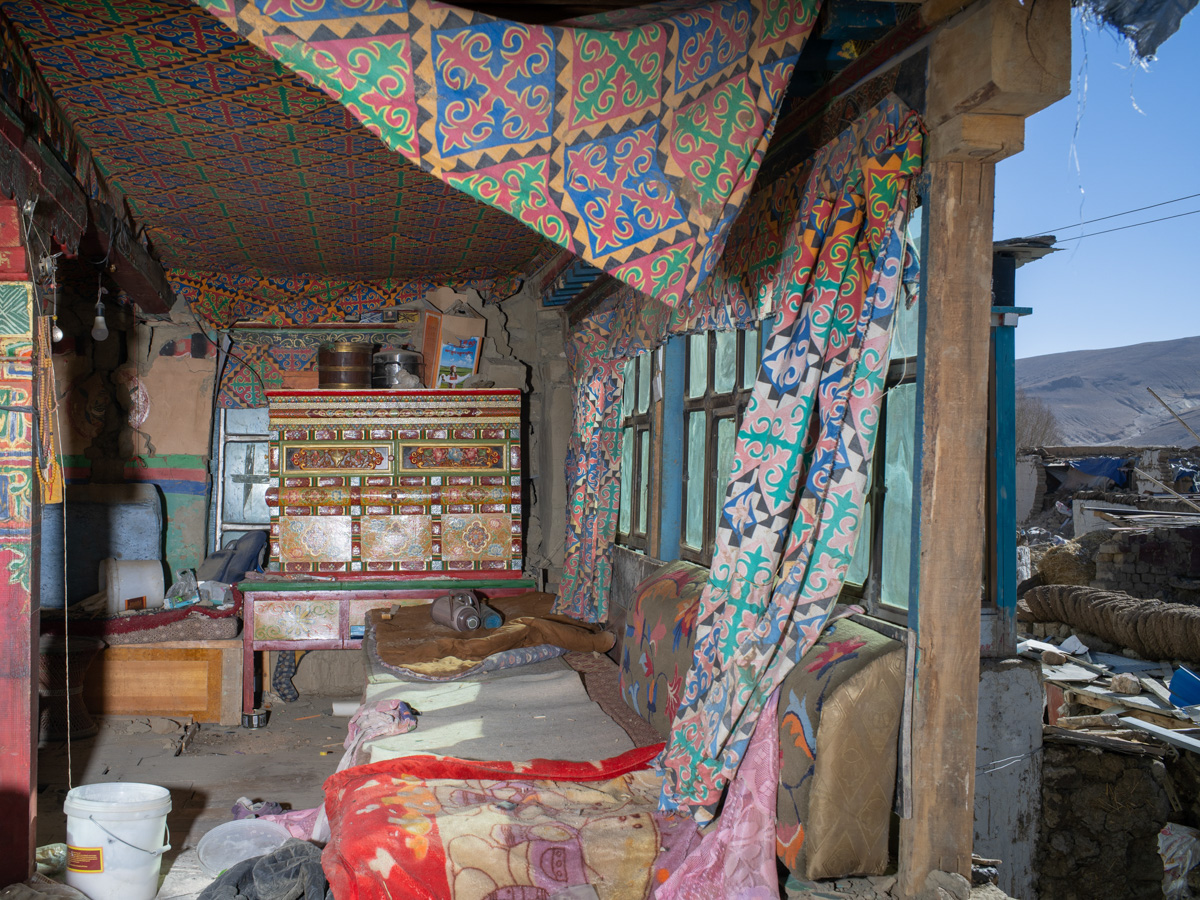
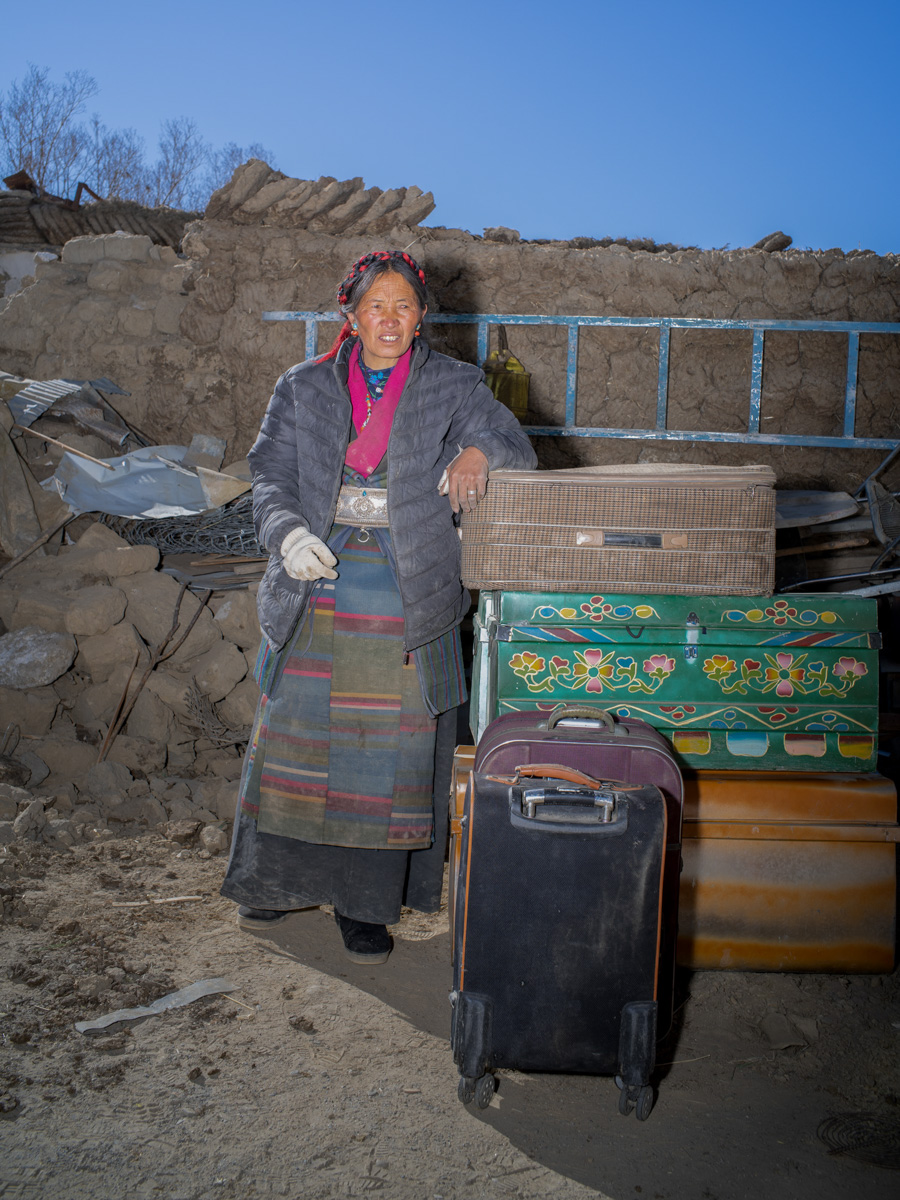
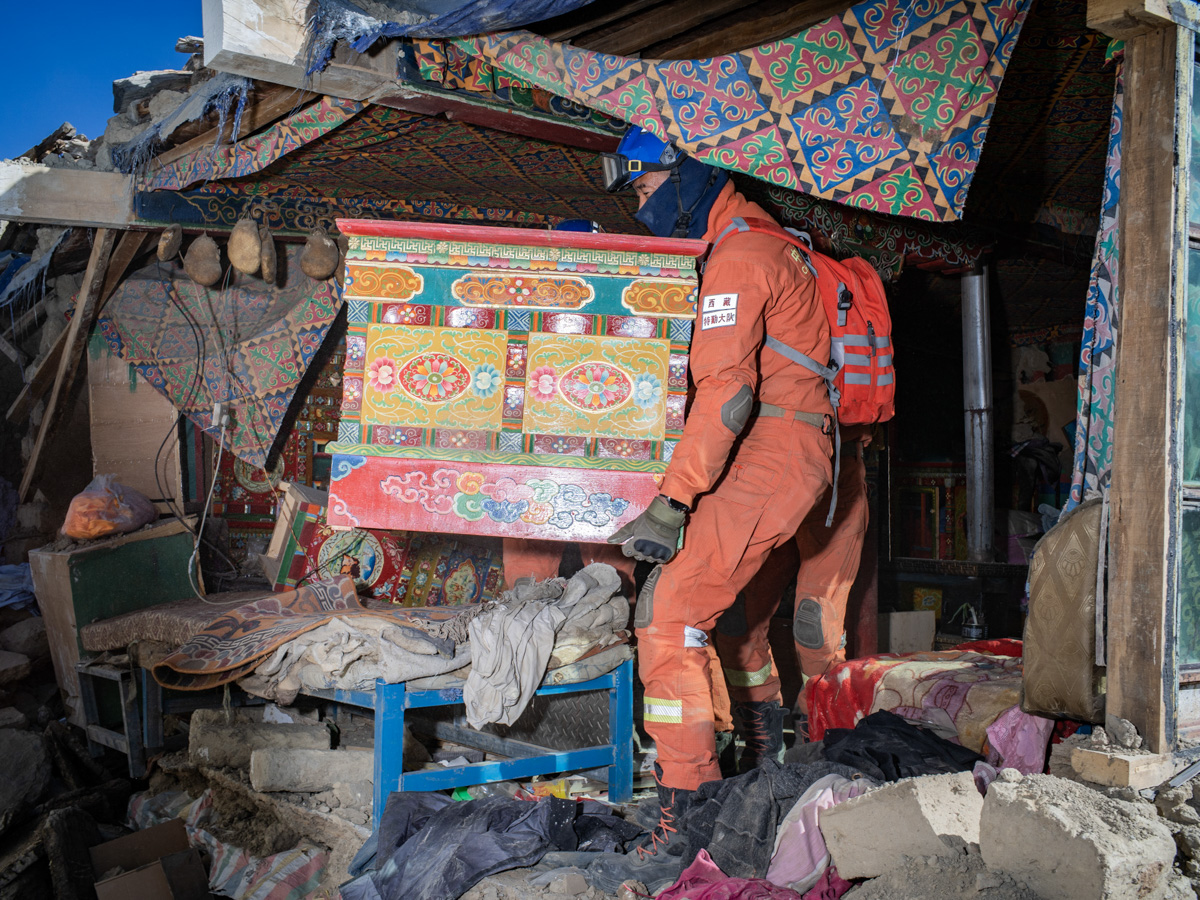
I stepped inside numerous homes collapsed by the tremors,
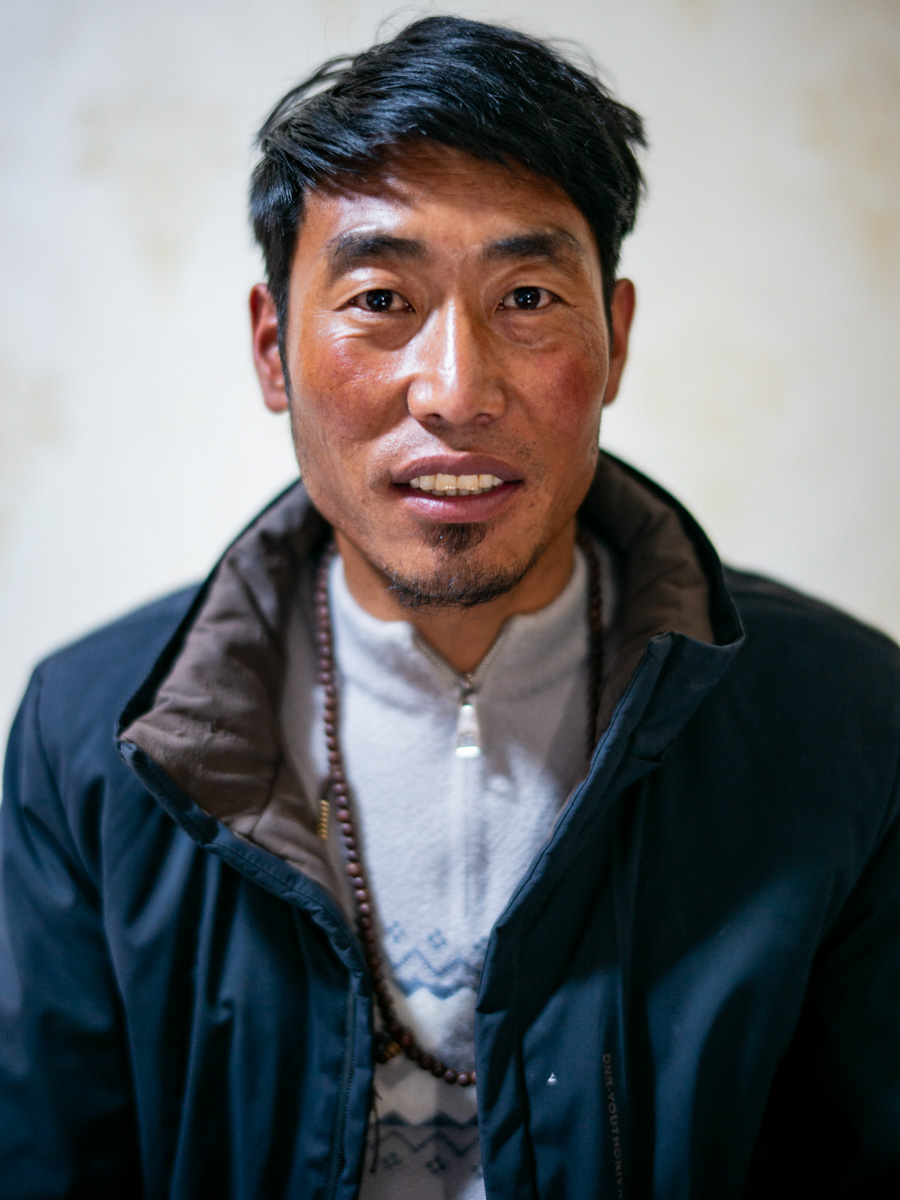
trying my best to connect with the affected Tibetan villagers.
Because most of them spoke no Mandarin, our communication
transcended words; I had to read their stories through the
meager belongings they managed to salvage from the dangerous
ruins, and the deep, silent lines of worry etched across
their faces.
Yet, in this land deeply saturated by Tibetan Buddhism,
I noticed something remarkable. The villagers did not
exhibit the overwhelming helplessness often witnessed in
the wake of such disasters. Instead, their enduring faith
served as a fortress of strength amid the ruins. Their
devotion was raw and intensely genuine. Amid the shattered
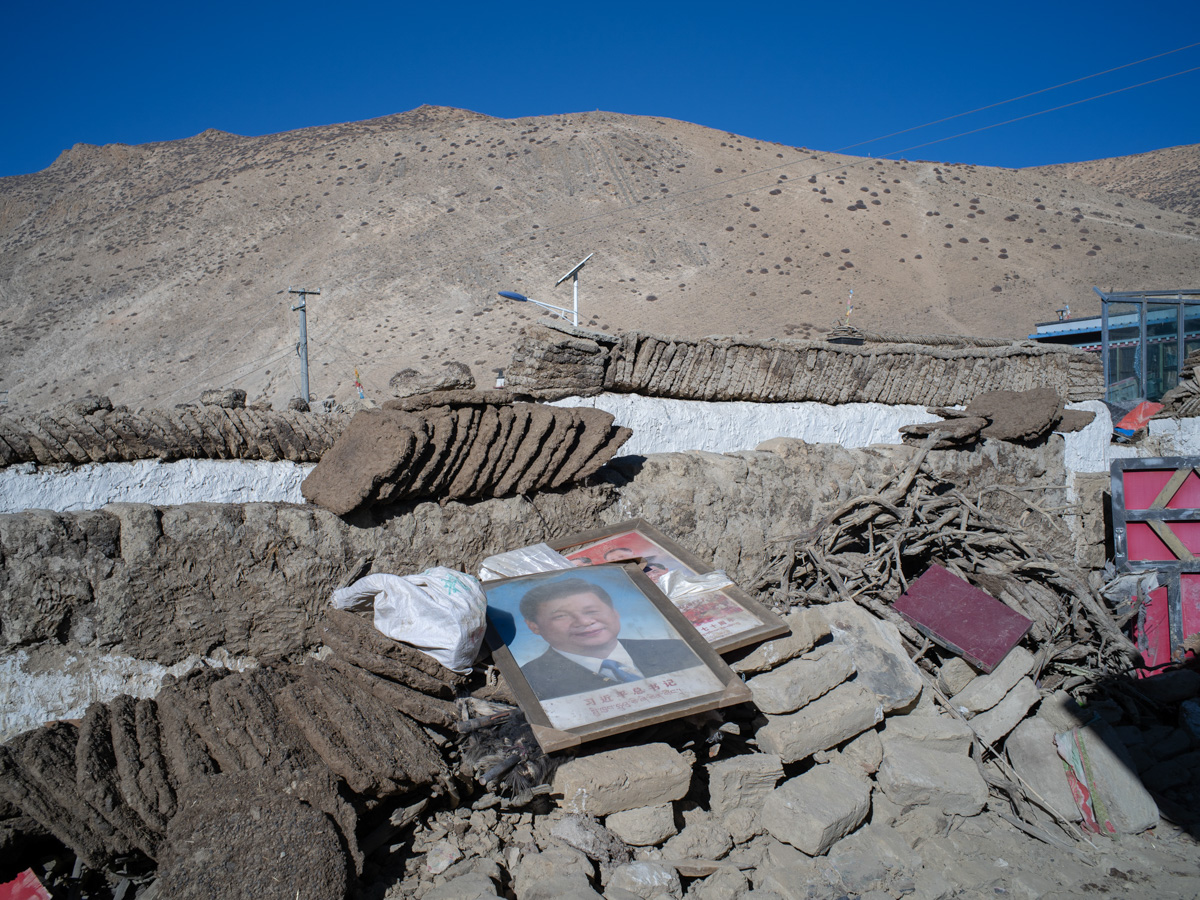
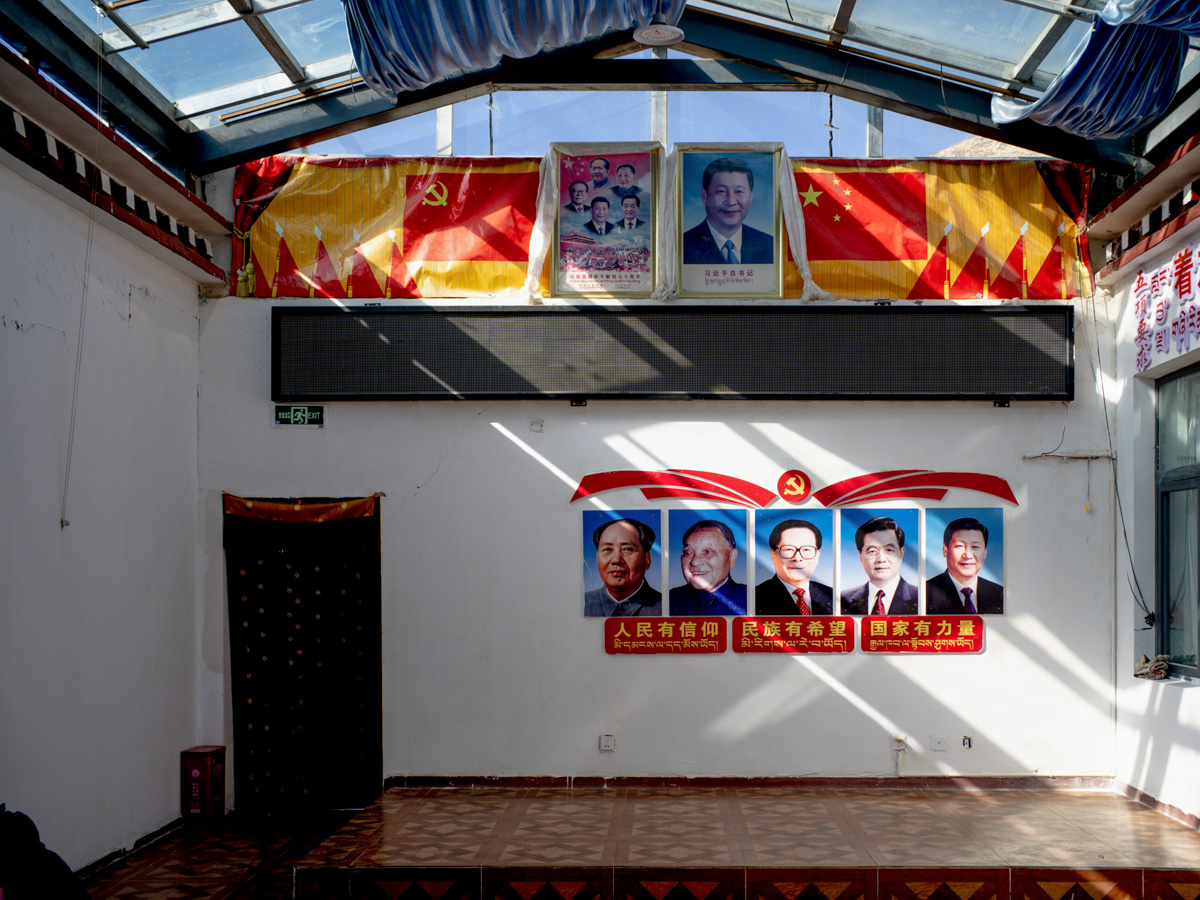
concrete, one striking scene caught my eye: while secular
portraits required by external authority lay buried or
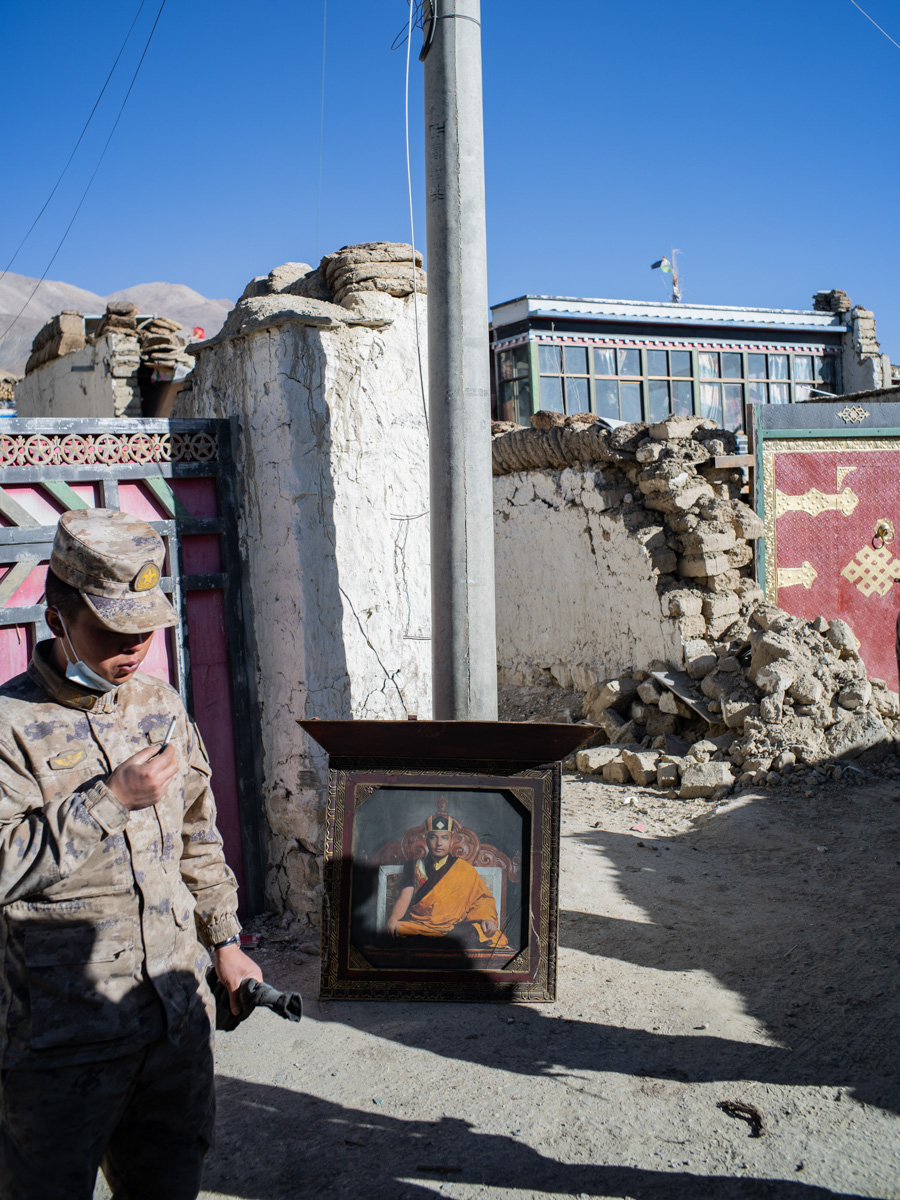
discarded in the rubble, the villagers followed a collective
instinct to carefully dig out the sacred icon of Düsum
Khyenpa (the founder of the Karma Kagyu sect). They wiped
the dust clean from his face and reverently placed his
portrait by the roadside.
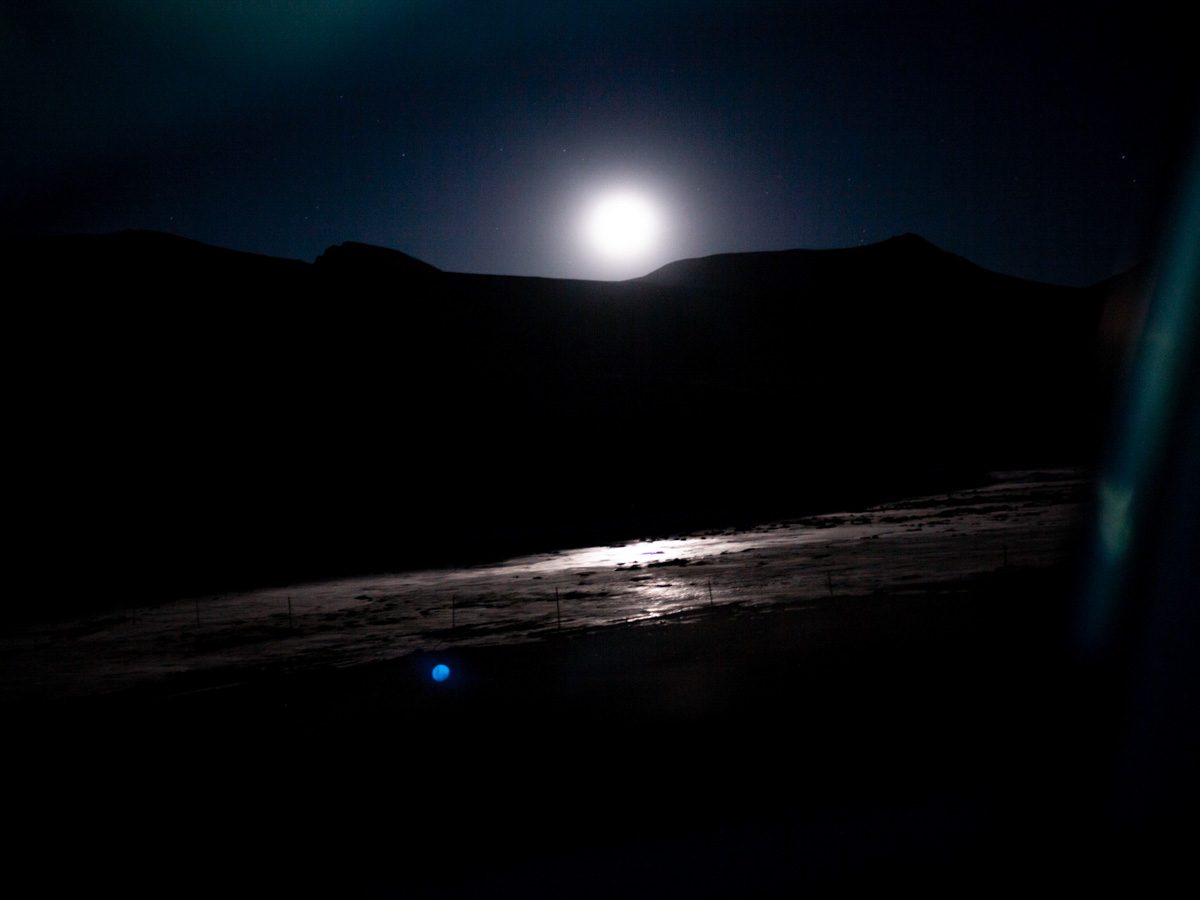
Journeys in Tibet are always complex yet deeply fascinating.
As I was leaving one village to head towards the next township,
a young Tibetan man flagged me down on the roadside, asking
for a lift. Driving down those desolate, unfamiliar plateau
roads, his companionship was a welcome blessing.
As it turned out, he was a university student studying in
Lhasa. When the earthquake hit, he threw caution to the wind
and rushed back to Tingri. Only after seeing with his own eyes
that his family was safe was he now heading back to his
studies. During our drive, he shared a fascinating perspective
rooted in the Buddhist concept of Karma. He was utterly
convinced that the earthquake happened because human
over-development had disrupted the natural environment,
prompting Avalokiteshvara (the Bodhisattva of Compassion)
to shake the earth as a stern warning for humanity to live
in harmony with nature. He spoke of the deity with such
absolute certainty, as if the Bodhisattva were a close,
personal friend.
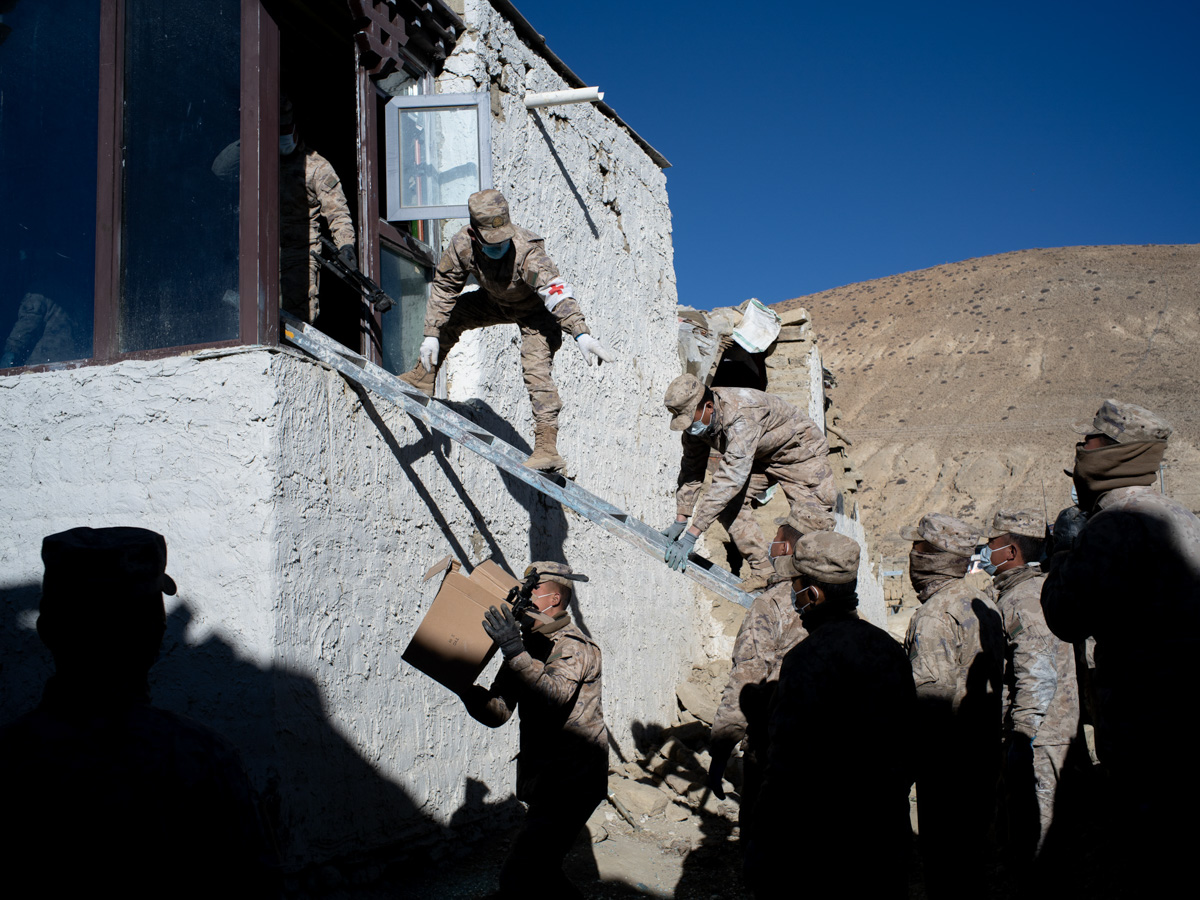
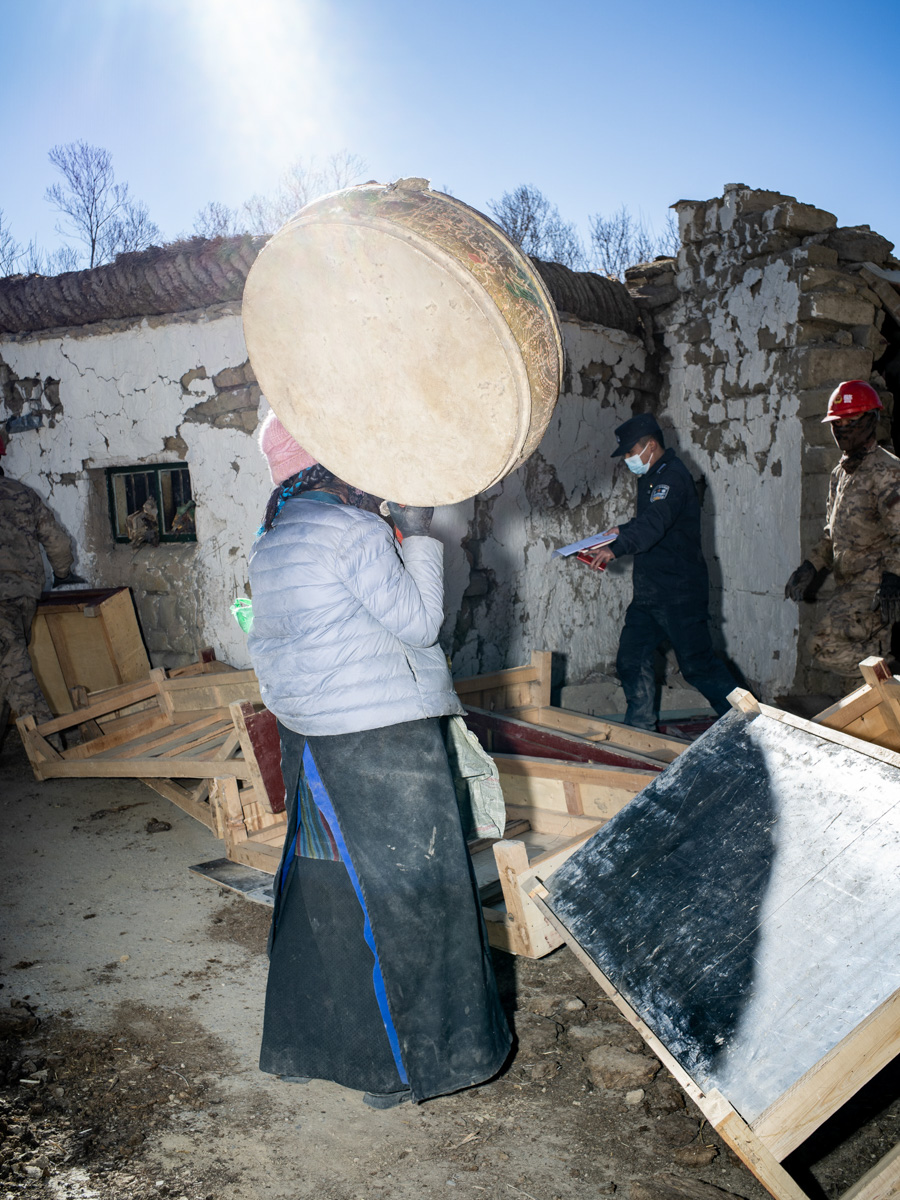
In the aftermath of the tragedy, state institutions and private
charities have poured immense manpower and resources into the
relief and rebuilding efforts. I have no doubt that in the near
future, stronger and more beautiful homes will be built for them,
and their daily rhythms will return to normal.
Yet, standing among the dust of these ruins, a haunting question
lingers in my heart: as the physical houses are successfully
rebuilt, who will come to care for their souls?